001.01—Ontology·
Ontology 101: Modeling Reality
Abstract
How can the complexity of the real world be represented inside a computational system? This article explores the foundations of ontology, drawing upon Stanford University's Ontology Development 101 and Palantir Technologies' operational approach. The Grooming Palace, a pet shop in Pasay City, Philippines, serves as the practical environment through which these concepts are introduced.
An exploration of knowledge representation through the operations of a small business.
01 — The Problem of Representation
Consider a pet shop.
Customers enter with their dogs. Groomers perform services. Employees coordinate activities. Payments are collected. Other dogs are cared for while awaiting new owners.
To a human, the meaning behind these activities is relatively intuitive. We understand the difference between a dog and its owner, between a grooming service and an appointment, and between requesting a service and completing one.
For a computational system, however, these distinctions must be explicitly defined.
A collection of customer records, spreadsheets, appointment schedules, and transaction histories contains information about the business. But the existence of this information does not, by itself, establish a coherent representation of how the business operates.
How are these individual pieces of information connected? What do they mean? What constraints govern their relationships?
These questions introduce the problem of knowledge representation.
02 — What Is an Ontology?
The term ontology originates in philosophy, where it concerns the study of existence and the categories of things that exist.
Within computer science, ontology takes on a more practical purpose: establishing a formal representation of knowledge within a defined domain.
In their 2001 publication, Noy and McGuinness describe ontologies, drawing on Gruber's earlier work, as:
"explicit formal specifications of the terms in the domain and relations among them"
— Noy and McGuinness, 2001, §1 [1]
The significance of this definition lies in the distinction between information and meaning.
A database may contain a record of a dog named Coco. An ontology establishes what a dog is within the domain, which characteristics describe it, and how it relates to other concepts such as breeds, owners, appointments, and grooming services.
The objective is to construct a shared representation that both humans and computational systems can interpret.
Fig. 02 — Three representations of the same reality
We recognize Coco as a dog.
03 — Defining the Domain
An ontology does not attempt to represent everything that exists. Its scope is determined by the problem it is intended to address.
For this article, the selected domain is The Grooming Palace, with an initial focus on its grooming operations.
Before constructing the ontology, we must establish what the representation should enable us to understand.
For example, a useful grooming ontology might answer the following questions:
- Which dogs are scheduled for grooming today?
- Which customers requested those services?
- Which groomers are available?
- What services has a particular dog previously received?
- Which completed services are awaiting payment?
Noy and McGuinness refer to these as competency questions: questions used to establish and evaluate the scope of an ontology. [1]
Their purpose is to guide the modeling process. If the representation cannot answer the questions for which it was designed, it may require additional concepts, properties, or relationships.
This shifts the objective from collecting as much information as possible to representing the information necessary for a particular purpose.
Fig. 03 — Questions decide the scope
Point at a question to see which concepts it needs.
Illustrative. The questions are the article's own.
04 — Classes, Instances, and Properties
The initial representation begins by identifying the entities relevant to the domain.
Within the proposed Grooming Palace ontology, these may include:
| Class | Description |
|---|---|
| Dog | An animal receiving care or grooming services |
| Customer | A person requesting or purchasing a service |
| Groomer | A person responsible for performing grooming services |
| Service | A defined offering provided by the business |
| Appointment | An arrangement for a service to occur |
| Transaction | A record of a financial exchange |
A class represents a category of entities. An instance represents a specific member of that category.
Consider Coco, a Chow Chow.
Dog is the class. Coco is an individual instance of that class.
Properties describe the characteristics associated with an entity. Coco may have a name, breed, age, and weight. An appointment may have a scheduled time and status. A grooming service may have a price and estimated duration.
Together, classes, instances, and properties establish the vocabulary through which the computational system can describe the domain.
Fig. 04 — One class, many instances
Class
Dog
A category. It says what every dog has, and holds no values.
instance of
Instance
Coco
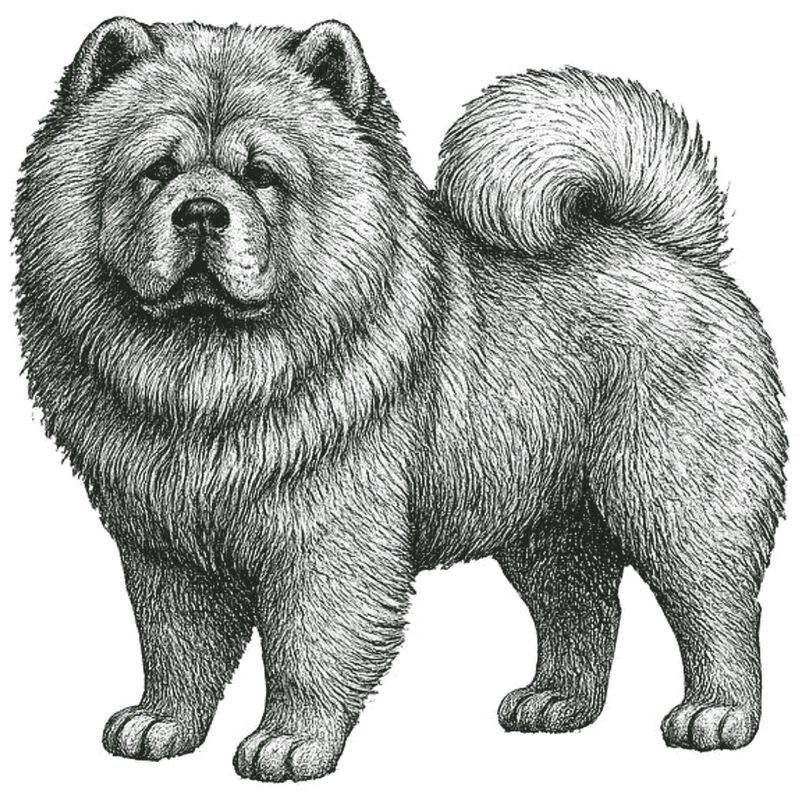
One particular dog. The same slots, filled in.
Dog is the class. Coco is one instance of it.
Illustrative values.
05 — Relationships and Meaning
Entities rarely exist in isolation.
A customer may own a dog. A dog may be associated with an appointment. An appointment may include a grooming service and be assigned to a groomer.
These relationships provide context that individual records cannot communicate on their own.
Consider the following representation:
Customer → owns → Dog
Customer → books → Appointment
Appointment → concerns → Dog
Appointment → includes → Service
Appointment → assigned to → Groomer
Through these connections, the computational representation begins to reflect the organization of the business itself.
It becomes possible to move between related entities and answer questions that require knowledge of more than one record.
For example, determining which groomer is responsible for a particular dog requires connecting the dog to its appointment and the appointment to the assigned groomer.
The relationship is part of the knowledge being represented.
Fig. 05 — An answer is a path
Point at a question to follow the relationships that answer it.
Illustrative. Classes and relationships are the article's own.
06 — From Knowledge Representation to Operational Ontology
The representation established so far describes the entities and relationships that exist within the domain.
A business, however, is not static.
Appointments are created, services are performed, payments are collected, and operational conditions continuously change.
Palantir Technologies extends ontology into this operational dimension. Its architecture documentation describes the approach as follows:
"The Ontology models decisions through the four-fold integration of data, logic, action, and security."
— Palantir Technologies, The Ontology System [2]
This introduces four complementary components.
Data represents the current state of the business.
Logic determines how available information should be evaluated.
Action provides a mechanism for changing the operational state.
Security determines who is permitted to access information or perform an action.
Consider a customer requesting a grooming appointment.
The relevant data includes the requested service, the proposed appointment time, and groomer availability.
The logic determines whether the business can accommodate the request.
The action confirms or reschedules the appointment.
Security establishes whether the person or system requesting that action has the necessary authority.
The ontology therefore becomes more than a representation of business entities. Within this operational architecture, it provides context for decisions and a structured means through which those decisions can be executed.
Fig. 06 — Four parts of one decision
Data, the current state of the business. The requested service, the proposed time, and which groomers are free.
After Palantir's description of data, logic, action and security [2]. The example is illustrative.
07 — The Relationship Between Ontology and Artificial Intelligence
A general-purpose language model may possess knowledge about dogs, grooming procedures, scheduling, and small business management.
However, that knowledge does not automatically provide an understanding of the current operational state of a particular business.
An AI model does not inherently know which dogs are scheduled for grooming today, which employees are available, or what policies govern the business.
That information must be made accessible to the model.
Consider an AI agent assisting with the scheduling process at The Grooming Palace.
Without structured operational context, the agent may provide general recommendations about appointment scheduling.
With access to the proposed ontology, the agent could potentially inspect available appointments, evaluate scheduling constraints, identify conflicts, and recommend an alternative time.
Any resulting action would still be subject to the permissions and business rules established by the operational system.
This distinction separates intelligence from authority.
The AI model may evaluate a situation and propose an action. The operational system determines whether that action is valid and authorized.
Whether this architecture produces more accurate, reliable, or computationally efficient decisions remains a question for experimental evaluation.
Fig. 07 — The model proposes, the system decides
The model knows about grooming in general. It does not know this shop's day, so its answer stays general.
An invented scenario. Whether this improves decisions is a question for experiment.
08 — Representation as a Research Foundation
The Grooming Palace provides a starting point for investigating a broader engineering question.
Can different real-world environments be represented through a common computational architecture?
A pet shop contains dogs, customers, appointments, and services.
A warehouse contains equipment, technicians, locations, and transfers.
A maritime network contains ports, cargo, and historical observations.
Although these domains differ substantially, each requires decisions about which entities to represent, how their relationships should be defined, and what rules govern their operations.
Investigating these common principles forms part of the Representation research domain at Binary 1702.
Subsequent publications will explore how these representations can support simulation, decision science, and computational optimization.
Watch the café explained one relationship at a time.
- Actorwho does things
- Thingwhat is held or used
- Eventwhat happens
- Placewhere things are
Object
Purchase Orderevent
Data
quantity · cost · approved by
Relationships
- Purchase Order is sent to Supplier
Actions
- Approve spendingNeeds a person
- Objects
- 6
- Relations
- 5
- Actions
- 3
Switch the environment. Every name changes; the kinds of object, the relationships and the permissioned actions do not. That is the case for a reusable ontology engine. Drawn from the Living Café environment (EXP_001). All three are illustrative models, not measured data.
09 — Conclusion
Ontology provides a foundation for translating domain knowledge into structured computational representations.
By defining entities, properties, relationships, and constraints, we establish a model through which software can interpret aspects of the world.
When extended through operational logic, executable actions, and authorization, this representation can also support intelligent decision-making.
The proposed Grooming Palace ontology represents an initial conceptual investigation rather than a validated operational deployment.
Future work will examine the actual business processes, construct a working ontology, and evaluate how intelligent agents interact with that representation.
The central research question remains:
How can structured representations of reality enable humans and artificial intelligence to operate complex systems more effectively?
References
- [1]Noy, N. F., & McGuinness, D. L. (2001). Ontology Development 101: A Guide to Creating Your First Ontology. Stanford University. https://protege.stanford.edu/publications/ontology_development/ontology101-noy-mcguinness.html
- [2]Palantir Technologies. (n.d.). The Ontology System. Foundry Architecture Center. https://www.palantir.com/docs/foundry/architecture-center/ontology-system
Related subjects in the Codex
OntologyKnowledge representationSemantic relationshipsOperational context